Colobus Monkey Trekking in Nyungwe National Park: Rwanda's Most Spectacular Primate Experience
Discover One of Africa's Largest Black-and-White Colobus Monkey Populations
When people think of Rwanda, mountain gorillas often take center stage. However, tucked away in the country's lush southwestern highlands lies another extraordinary wildlife experience that is equally captivating—Colobus Monkey Trekking in Nyungwe National Park.
Home to one of Africa's largest populations of Angolan black-and-white colobus monkeys, Nyungwe National Park offers visitors the rare opportunity to witness enormous troops of these elegant primates thriving in one of the oldest rainforests on the African continent. Unlike many primate encounters where visitors search for small family groups, Nyungwe's colobus monkeys often gather in troops of over 300 individuals, creating one of the most spectacular wildlife displays in Africa.
Whether you are a wildlife enthusiast, photographer, birdwatcher, or first-time safari traveler, this remarkable experience promises unforgettable memories deep within Rwanda's pristine rainforest.
About Nyungwe National Park
Located in southwestern Rwanda, Nyungwe National Park spans more than 1,000 square kilometers of protected montane rainforest. This ancient forest is believed to be over one million years old, making it one of Africa's oldest surviving rainforests.
The park forms part of the Albertine Rift biodiversity hotspot, recognized globally for its exceptional concentration of endemic wildlife and plant species. Its rolling mountains, mist-covered valleys, cascading waterfalls, and dense jungle create an enchanting landscape that feels untouched by time.
Nyungwe is internationally renowned for its incredible biodiversity, including:
- Over 13 species of primates
- More than 320 bird species
- Hundreds of butterfly species
- Over 1,000 plant species
- Rare orchids and medicinal plants
- Rich amphibian and reptile diversity
This remarkable ecosystem makes Nyungwe one of East Africa's premier destinations for nature lovers.
Meet the Black-and-White Colobus Monkey
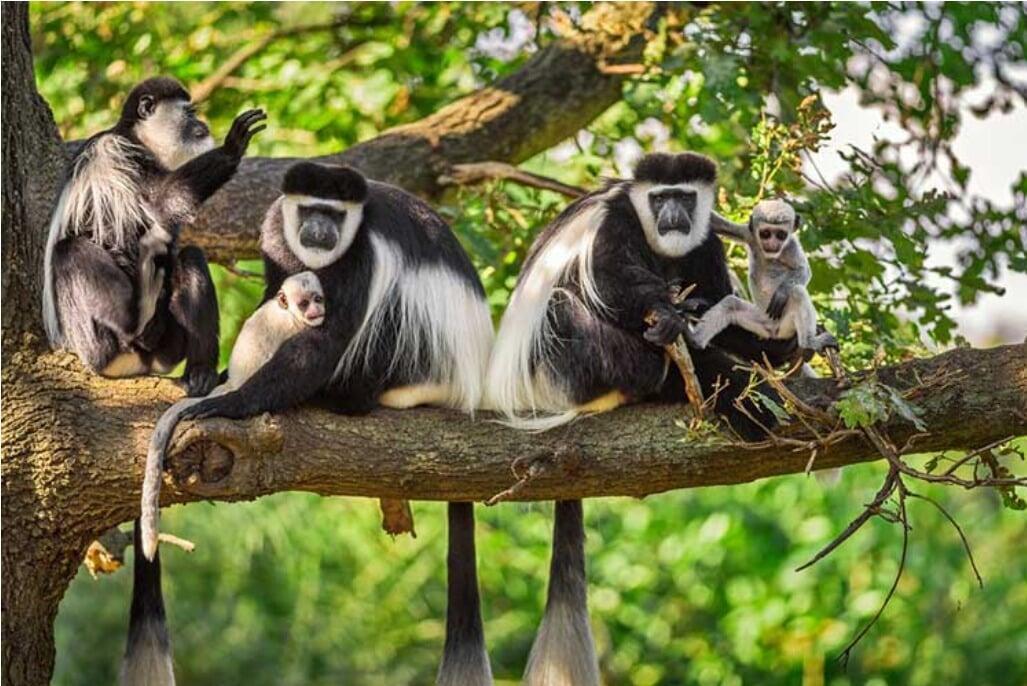
The Angolan black-and-white colobus monkey is among Africa's most striking primates. Instantly recognizable by its silky black fur contrasted with long flowing white mantle hair and magnificent white tail, it moves gracefully through the forest canopy with astonishing agility.
Unlike many monkey species, colobus monkeys possess no thumbs—a unique adaptation that allows them to swing effortlessly from branch to branch.
Their diet mainly consists of:
- Young leaves
- Forest fruits
- Seeds
- Flowers
- Tender shoots
Their specialized stomach allows them to digest leaves that many other primates cannot consume.
What Makes Nyungwe's Colobus Monkeys So Special?
Nyungwe National Park hosts one of the largest known populations of Angolan black-and-white colobus monkeys anywhere in Africa.
What truly distinguishes this experience is the size of the troops.
While most colobus monkey groups elsewhere consist of 20 to 50 individuals, Nyungwe's troops frequently exceed 200 members, with some reaching over 300 monkeys.
Watching hundreds of monkeys moving together through towering rainforest trees is an extraordinary spectacle unlike any other primate experience in Africa.
Visitors often witness:
- Mothers carrying young babies
- Juveniles playing energetically
- Dominant males watching over the troop
- Monkeys leaping effortlessly between giant trees
- Social grooming and communication
- Loud calls echoing through the rainforest
For wildlife photographers, these moments provide endless opportunities to capture stunning images.
The Colobus Monkey Trekking Experience
Your adventure begins early in the morning at the Uwinka Visitor Centre, where experienced park guides provide a comprehensive briefing about the trek, park regulations, and the behavior of the monkeys.
After registration, visitors are assigned to small guided groups before entering the rainforest.
Unlike mountain gorilla trekking, colobus monkey trekking is generally less physically demanding, making it suitable for visitors of varying fitness levels.
As you walk through ancient forest trails, your guide points out fascinating wildlife including:
- Rare trees
- Medicinal plants
- Colorful butterflies
- Bird species
- Other primates
- Forest insects
- Unique fungi
The anticipation builds as distant monkey calls echo through the canopy.
Once the troop is located, visitors spend approximately one hour observing these incredible animals.
During this time, you'll watch:
- Feeding behavior
- Family interactions
- Playful youngsters
- Acrobatic leaps through the treetops
- Natural social dynamics
The sheer number of monkeys surrounding the forest canopy creates an unforgettable wildlife encounter.
Other Primates You May Encounter
Nyungwe National Park is Rwanda's primate capital.
Besides the famous colobus monkeys, visitors may also encounter:
- Chimpanzees
- L'Hoest's monkeys
- Grey-cheeked mangabeys
- Blue monkeys
- Red-tailed monkeys
- Owl-faced monkeys
- Dent's mona monkeys
- Vervet monkeys
- Olive baboons
Every trek offers different wildlife sightings, making each visit unique.
Birdwatching Paradise
Nyungwe is also one of Africa's finest birdwatching destinations.
More than 320 bird species have been recorded here, including many species found nowhere else in the world.
Bird enthusiasts can search for:
- Great Blue Turaco
- Handsome Francolin
- Red-collared Mountain Babbler
- Grauer's Swamp Warbler
- Rwenzori Turaco
- Rockefeller's Sunbird
The park's rich birdlife complements every primate trekking experience.
Flora and Forest Beauty
Walking through Nyungwe feels like stepping into another world.
Towering ancient trees rise above thick moss-covered trunks while vines twist through dense vegetation.
Visitors pass:
- Giant ferns
- Bamboo forests
- Wild orchids
- Colorful mushrooms
- Crystal-clear streams
- Waterfalls
- Mountain ridges covered in mist
The rainforest itself is every bit as rewarding as the wildlife.
Best Time for Colobus Monkey Trekking
Colobus monkey trekking is available throughout the year.
Dry Seasons (Recommended)
- June to September
- December to February
Benefits include:
- Easier hiking
- Better photography conditions
- Less muddy trails
- Comfortable trekking weather
Rainy Seasons
- March to May
- October to November
Advantages include:
- Lush green forest
- Fewer tourists
- Beautiful misty scenery
- Excellent birdwatching
Even during rainy months, trekking remains possible and rewarding.
Fitness Level
Colobus monkey trekking is considered moderate.
Most hikes last between 2 and 4 hours depending on the location of the troop.
Participants should:
- Wear sturdy hiking boots
- Bring rain protection
- Carry drinking water
- Dress in long sleeves and trousers
- Use insect repellent
A reasonable level of fitness is recommended.
Responsible Wildlife Tourism
Nyungwe National Park is a conservation success story.
Tourism revenue directly supports:
- Forest protection
- Wildlife conservation
- Anti-poaching patrols
- Scientific research
- Community development
- Local employment
By participating in guided treks, visitors contribute to preserving one of Africa's most important rainforest ecosystems for future generations.
Combine Your Nyungwe Adventure
Many travelers combine colobus monkey trekking with other unforgettable experiences in Nyungwe National Park, including:
Chimpanzee Trekking
Track Rwanda's wild chimpanzees through the rainforest during an exciting early morning adventure.
Canopy Walkway
Walk 70 meters above the forest floor across East Africa's famous suspended canopy bridge while enjoying breathtaking rainforest views.
Waterfall Hiking
Explore scenic forest trails leading to hidden waterfalls surrounded by pristine rainforest.
Birdwatching Tours
Join specialist guides to discover Nyungwe's incredible diversity of endemic bird species.
Why Choose Colobus Monkey Trekking?
Colobus monkey trekking offers an experience unlike any other African safari activity.
Instead of observing wildlife from a vehicle, visitors become immersed in an ancient rainforest alive with movement, sound, and biodiversity.
Highlights include:
- Witnessing one of Africa's largest monkey troops
- Exploring one of the continent's oldest rainforests
- Exceptional wildlife photography opportunities
- Incredible biodiversity
- Knowledgeable local guides
- Moderate hiking suitable for most travelers
- Supporting conservation and local communities
Whether you're visiting Rwanda for gorilla trekking or seeking a unique rainforest adventure, Nyungwe National Park offers an unforgettable encounter with one of Africa's most fascinating primates.
Plan Your Colobus Monkey Adventure
A visit to Nyungwe National Park is more than just a wildlife excursion—it's a journey into one of Africa's last great rainforests, where every trail reveals new discoveries. Watching hundreds of black-and-white colobus monkeys glide effortlessly through the emerald canopy is an experience that leaves a lasting impression long after the trek ends.
Add this remarkable adventure to your Rwanda itinerary and discover why Nyungwe National Park is celebrated as one of Africa's finest destinations for primate trekking, biodiversity, and eco-tourism.
Planning to Visit Nyungwe National Park, Please Write your requirements to : sales@inboundafricatours.com